See how AI systems understand and recommend your business

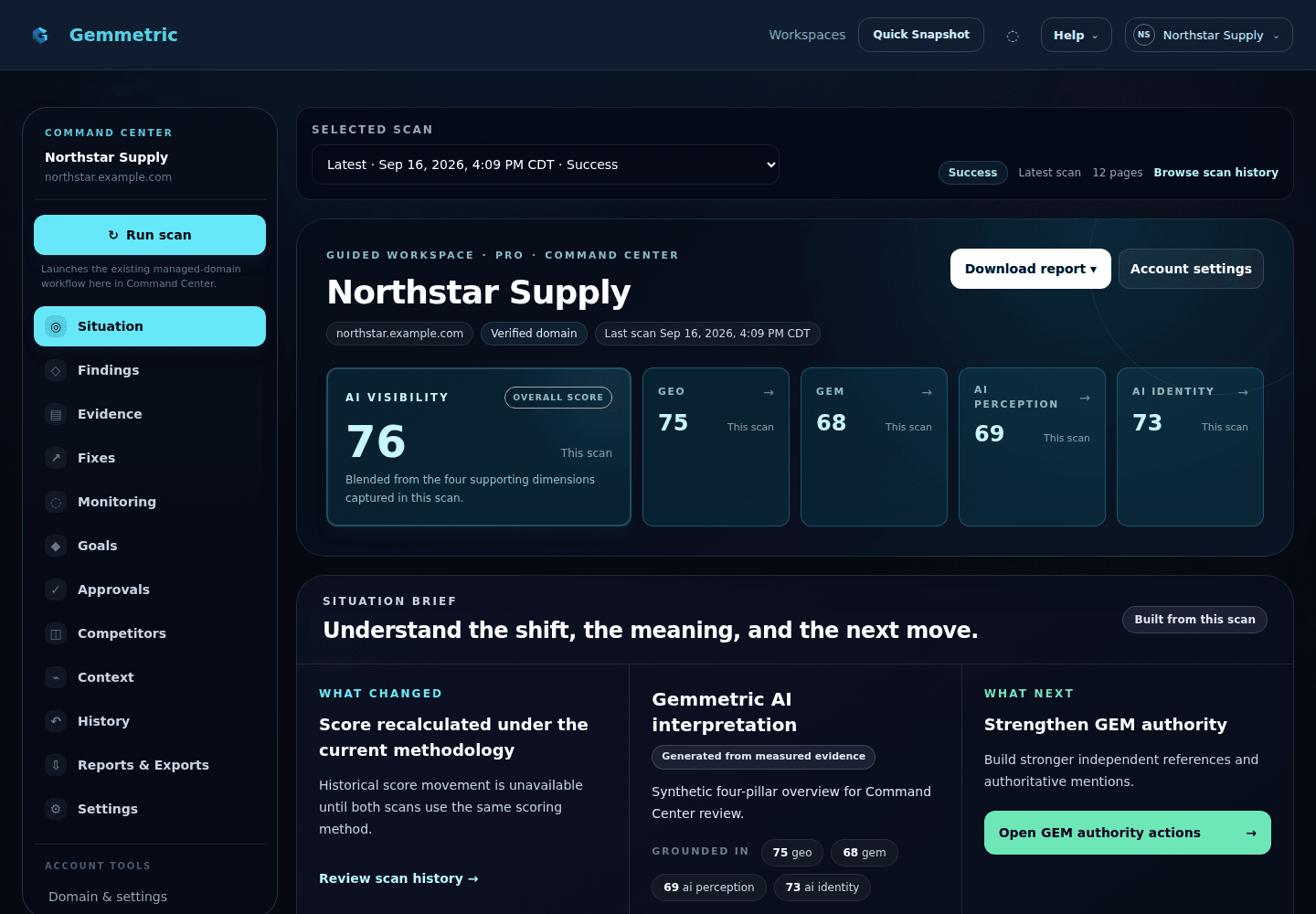
Gemmetric measures AI visibility: a roll-up score combining GEO (on-site readiness) + GEM (model strength). GEO measures how well your structure, metadata, and schema help generative engines parse each page. GEM measures model strength using awareness, understanding, trust, and reach.

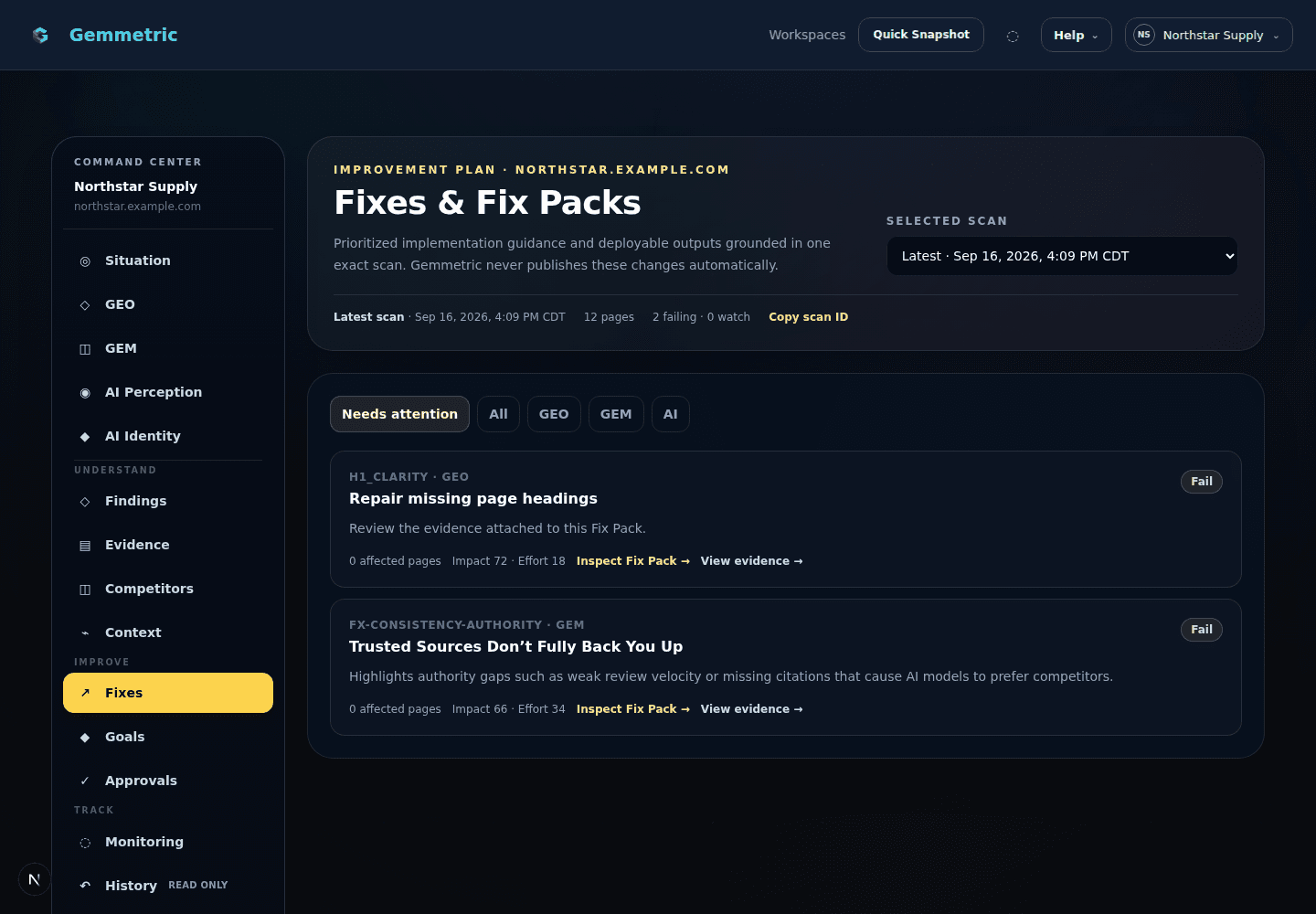
We look at on-site readiness (structure, schema, metadata, intent coverage) and the signals that affect model strength. Then we turn gaps into Fix Packs with deployable schema and copy.

Built for teams who need evidence they can stand behind.

Private beta: we review requests and invite teams as capacity opens.

AI is already deciding who gets seen

Search engines return lists. AI assistants return answers.

AI Visibility is driven by two things: how readable your site is (GEO) and how strong the model’s understanding is (GEM). It’s computed as a roll-up score combining the two.

GEO — Generative Entity Optimization

On-site readiness: structure, metadata, schema, and intent coverage.

GEO

GEM — Generative Entity Model

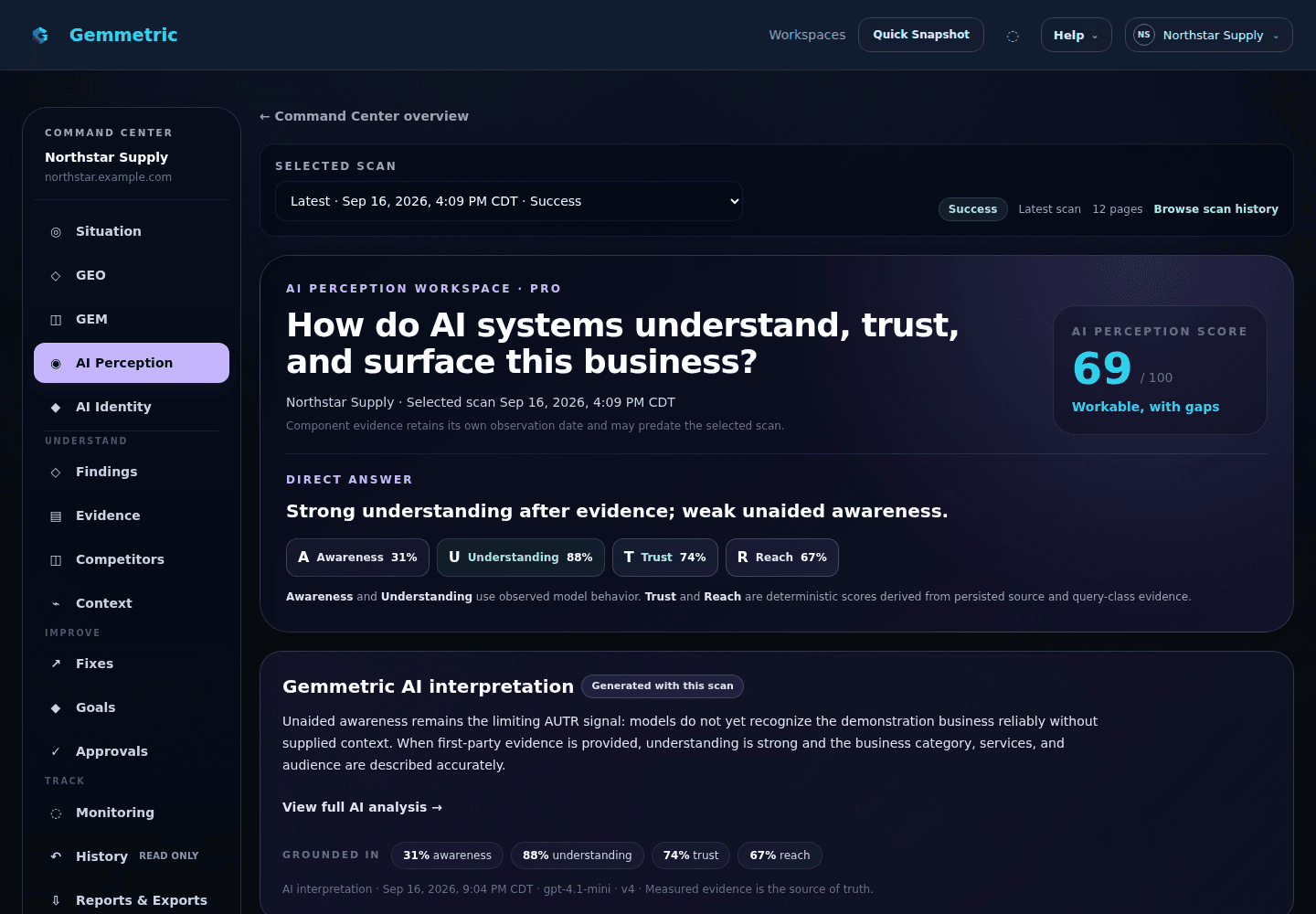
Model strength: awareness, understanding, trust, and reach.

GEM

AI Visibility

Roll-up score combining GEO (on-site readiness) + GEM (model strength) — likelihood to be surfaced in AI answers.

AI Visibility

The three questions the model is really asking

If those questions can’t be answered cleanly, recommendation confidence drops. You usually do not see that in analytics, because the user never clicks through. Scores are computed from what we can observe. If access is blocked, we’ll show what’s missing and what to fix first.

  • Can the site be parsed cleanly (structure, schema, metadata)?
  • Does the model have a strong, stable understanding of the business?
  • Will it surface and recommend the business for the user’s intent?

Traditional SEO optimizes for

Being found

  • Keywords, backlinks, metadata
  • Clicks, impressions, and rankings
  • Retrieval: which page should show up?

AI visibility optimizes for

Being chosen

  • Clarity (GEO) + model strength (GEM)
  • Answerability for real user intents
  • Confidence: can the model recommend this?

This is why “more content” does not automatically help. If your schema is incomplete, your business identity is inconsistent across listings, or your pages are hard to parse, the model hesitates.

What you get after a scan

Clear fixes you can apply

You get core signal scores (GEO, GEM, and AI Visibility), diagnostics like AI Perception, and Fix Packs with deployable schema and copy. This is designed to plug into a real workflow. Engineers can ship JSON-LD, marketers can update content blocks, and everyone can see the delta after the next scan.

See the workflow →

GEO

On-site readiness

GEM

Model strength

Awareness • Understanding • Trust • Reach

AI Visibility

Roll-up of GEO + GEM

GEO Score

Schema + metadata opportunity

GEM Score

Trust + reach gaps detected

AI Visibility Score

Roll-up of GEO + GEM

AI Perception

Misidentification risk detected

Top Fix Pack (example)

Add LocalBusiness + Service schema, clarify primary category language, and publish an FAQ block aligned to customer intent.

Deployable output

{
  "@context": "https://schema.org",
  "@type": "Organization",
  "name": "Your Business",
  "url": "https://example.com",
  "sameAs": ["https://..."]
}

Fix Packs

Go from audit to deploy without the hand waving

Traditional tools stop at diagnostics. Fix Packs bundle the evidence, the recommended change, and deployable outputs. That usually means GEO fixes (JSON-LD, metadata, intent coverage) and GEM fixes (actions that improve model strength by improving the inputs that influence it—especially trust and reach—plus copy written for real intent queries.

See what you get →

What’s wrong (evidence)

  • Missing Service + FAQ schema on key pages
  • Inconsistent primary category language
  • Thin intent coverage for “comparison” queries

The fix (deployable)

  • GEO fixes: JSON-LD + metadata + intent-aligned copy
  • GEM fixes: inputs that influence model strength (especially trust + reach)
  • Priority ordering + estimated impact delta

Export bundle

JSON-LD snippet, copy blocks, CSV diagnostics, and a PDF-ready summary. Everything you need to implement.

Trust & accountability

Enterprise posture built in

The difference between a cool AI tool and a platform teams can rely on is operational truth. You need traceability, repeatability, and transparency.

Sample metrics shown for illustration.

Success rate (rolling)

99.2%

See reliability over time. No black boxes.

Avg scan duration

42s

Latency spikes can indicate site or routing issues.

Failure rate by domain

0.8%

Surface blocked crawlers, robots rules, and auth walls.

SLA compliance

On target

Enterprise posture: measurable, auditable delivery.

You get the same operational transparency we use internally.

Read the SLA story →

Avoids

  • Rank tracking dashboards
  • Keyword volume charts
  • Content-at-scale generators
  • Black-box automation

Focuses on

  • Machine-readable clarity (structure + schema)
  • Model strength: awareness, understanding, trust, and reach
  • AI perception diagnostics (what models believe and recommend)
  • Deployable Fix Packs with measurable deltas

If AI visibility matters to your business, this is the platform built for it.

We’ll review your request and invite you when a slot opens. No hype. No shortcuts. Just clarity you can defend with data.